
Alkaline Earth Elements is a comprehensive text that delivers an up-to-date scientific exploration of the Group 1 and Group 2 elements. This volume provides deep insights into the physics, chemistry, geology, of these unique elemental families. The book is specifically structured to help students and researchers navigate how these highly reactive metals are synthesized in the universe, discovered by scientists, and integrated into modern technology. The text primarily addresses how scientists classify the periodic table based on electrical conductivity, atomic structure, and chemical properties under normal pressures. While many metals share general traits, Group 2 elements beryllium, magnesium, calcium, strontium, barium, and radium possess specific valence configurations that demand distinct classification. The book systematically breaks down these classifications, highlighting: The \(ns^{2}\) outer electron configuration that dictates Group 2 chemistry. The universal tendency to form \(+2\) cations by readily losing two valence electrons. Gradations in reactivity, comparing the violent reactions of alkali metals to the slightly more stable, yet highly reactive, alkaline earths. Beyond raw laboratory data, the authors place heavy emphasis on practical, societal context. The book explores how the electropositive nature and strong reducing capabilities of alkaline earth metals drive essential global systems. The book does not shy away from the societal dilemmas or environmental challenges connected to these elements. It examines the hazards of processing radioactive radium, the extreme reactivity risks associated with pure barium and strontium storage, and the ecological footprint left behind by industrial extraction processes.
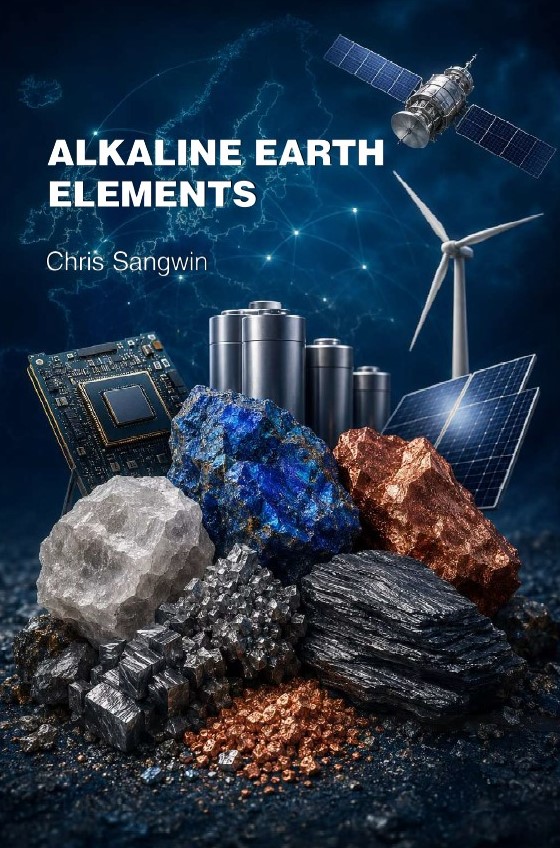
Alkaline Earth Elements
$125.99
Author Chris Sangwin
Binding Paperback
ISBN 9781995870923
Language English
Pages 294
Subject Category Chemistry
Year of Publication 2027
Related Products

Chemistry of Enzymes
$125.99
Noble Gases Elements
$125.99
Biomolecules, Polymers and Drugs
$125.99
Reviews
There are no reviews yet.