
The Book X-ray crystallography has served as the ultimate microscope for the atomic world. Because the distances between atoms in a molecule are roughly equal to the wavelengths of X-rays (around 0.1 nanometers), crystals scatter these high-energy waves in specific, geometric patterns. A comprehensive textbook dedicated to this discipline explores how scientists capture these scattered rays and mathematically reverse-engineer them to reveal the precise three-dimensional arrangements of atoms, molecules, and complex biological engines. The foundation of any text on this subject begins with classical wave mechanics and solid-state physics. A practical guide systematically walks researchers through the meticulous phase-by-phase physical and computational workflow. X-ray crystallography’s historical legacy is unmatched, having yielded dozens of Nobel Prizes. A textbook on this topic typically dedicates specific chapters to its monumental real-world impacts. The final sections of a contemporary textbook look at how the discipline is evolving. While the emergence of cryo-electron microscopy (cryo-EM) has taken over the modeling of huge, flexible protein complexes, X-ray crystallography remains unmatched for high-resolution drug-binding studies. Furthermore, the rise of X-ray Free-Electron Lasers (XFELs) allows for time-resolved serial femtosecond crystallography. This cutting-edge method shoots ultra-short X-ray pulses at a stream of tiny crystals, capturing atomic motion in real-time and essentially producing movies of chemical bonds breaking and forming. This subject matter provides a foundational resource for graduate students, structural biologists, inorganic chemists, and materials engineers. It arms researchers with the theoretical clarity and analytical confidence needed to solve complex crystal structures and critically evaluate structural data from public databases like the Protein Data Bank (PDB) and the Cambridge Structural Database (CSD).
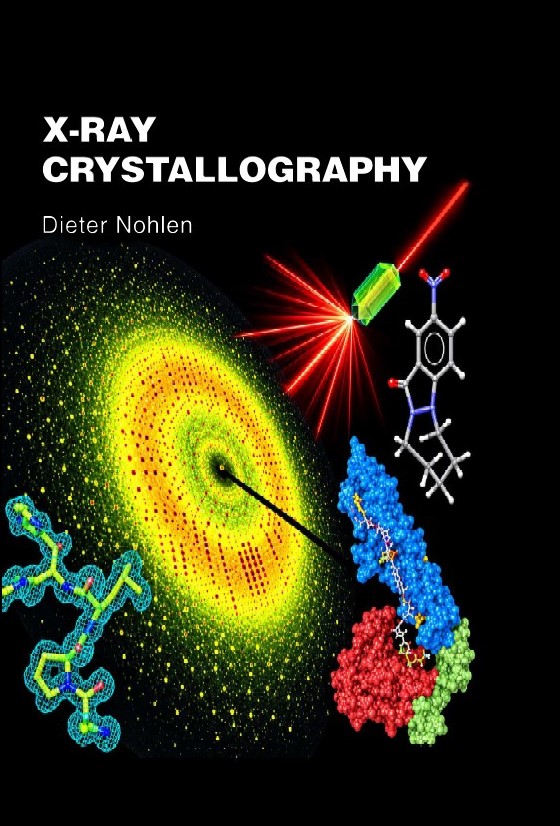
X-ray Crystallography
$125.99
Author Dieter Nohlen
Binding Paperback
ISBN 9781995871227
Language English
Pages 304
Subject Category Chemistry
Year of Publication 2027
Related Products
Mesoscopic Chemistry
$125.99
Agricultural Chemistry
$69.95
Pharmaceutical Salts
$125.99
Drugs and Poisons
$125.99
Reviews
There are no reviews yet.