
Improving and Controlling Soil Health serves as an essential academic textbook and field manual designed to address the critical global challenge of soil degradation. The text explores the intricate biological, chemical, and physical frameworks that dictate soil fertility. It provides students, agronomists, and land managers with data-driven methodologies to move away from chemical-heavy cultivation, transitioning toward sustainable ecosystems that boost crop yields while protecting the planet. The book organizes its comprehensive scientific curriculum into distinct modules, guiding readers through both underground mechanics and macro-level field management. A core strength of the volume is its insistence on a systems-based approach to land preservation. Rather than evaluating amendments in isolation, the book explores the deep soil-plant-atmosphere continuum, showing how chemical applications interact directly with subterranean wildlife and local water tables. It highlights that working with natural biological cycles, rather than continually forcing artificial inputs, drastically cuts long-term capital costs and increases farm profitability. Furthermore, the text transitions from a theoretical guide into an active, field-ready reference by providing diagnostic indicators. It includes step-by-step instructions on field testing pH levels, measuring aggregate stability, and tracking water retention capacities. By pairing calculation keys with case studies of successful ecological restoration, the book serves as an active roadmap for reversing historical soil misuse. A vital curriculum textbook for undergraduate and postgraduate courses in soil science, agronomy, and sustainable land management. A valuable validation manual for ecologists tracking carbon storage, environmental remediation, and watershed health. A practical book for agribusiness professionals building automated, chemical-free crop protection pipelines. In summary, Improving and Controlling Soil Health addresses the structural symptoms of soil failure before environmental regulations mandate changes. It balances pure soil biochemistry with practical field metrics, equipping the next generation of agricultural professionals with the exact tools needed to secure global food networks.
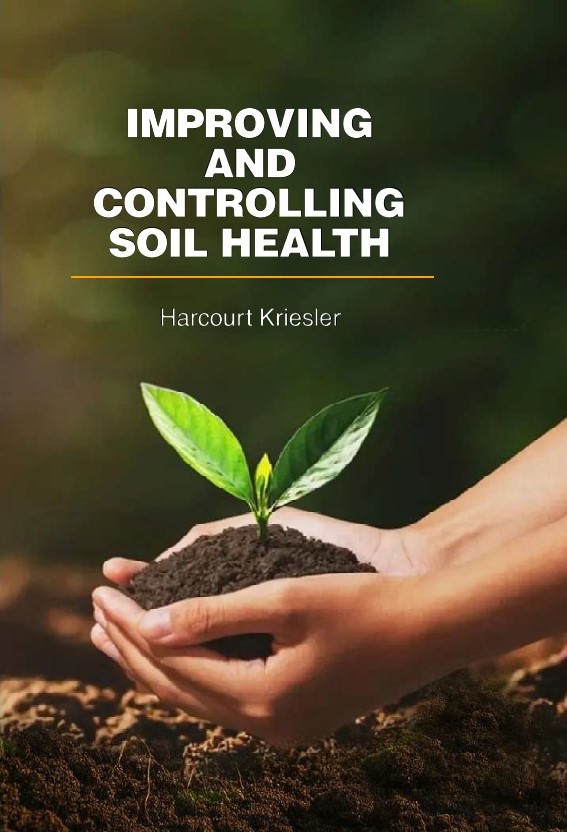
Improving and controlling Soil Health
$124.99
Author Harcourt Kriesler
Binding Paperback
ISBN 9781995870275
Language English
Pages 306
Subject Category Agriculture
Year of Publication 2027
Related Products
Modeling Soil Physical Processes
$124.99

Seed Science And Technology
$69.95
Agricultural Land Drainage
$124.99
Reviews
There are no reviews yet.